
SEO for Pest Control: Check U.S. Visibility Before Hiring
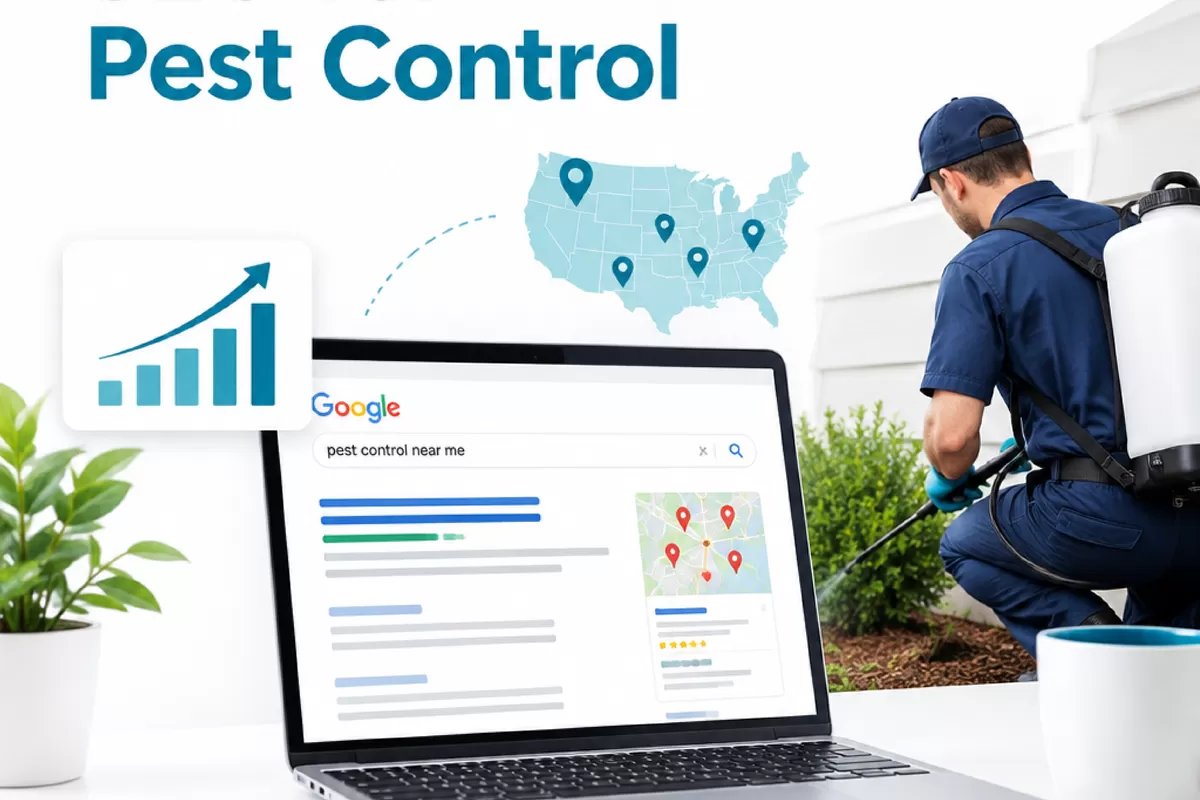
Pest control owners in the United States can spend months paying for SEO without knowing whether it is reaching nearby customers. A rise in website traffic may look encouraging, but it matters less if the visitors are outside your service area or searching for a pest you do not treat.
To judge whether a strategy is useful, check more than rankings. Review local search visibility, the services and locations represented on your site, the technical work behind it, and whether reports connect activity to qualified inquiries. These checks can help you ask better questions before hiring a provider or renewing a contract.
SEO for pest control should improve local visibility in the United States
Most pest control searches have a local purpose. Someone searching for an exterminator near me or termite treatment nearby usually needs a company that serves their location and handles that specific problem. A relevant strategy should account for how your business appears in local organic results and the Google Maps results often called the map pack.
Look for a clear way to review visibility across the places you actually serve. A single ranking report may not tell the full story: search results can vary by location, and a strong position for one search does not establish broad local coverage. Ask which service areas and search terms are being monitored, and how the provider distinguishes useful visibility from general traffic.
Your Google Business Profile should also be part of the discussion. Check that its business name, address or service-area details, phone number, hours, and categories accurately reflect your operation. These details should agree with key business listings elsewhere online. Consistent name, address, and phone information, often shortened to NAP, helps customers confirm they have found the right company. Do not assume that creating more directory listings is automatically better; accuracy and relevance matter.
Service-area pages need the same care. A page for a city or neighborhood should explain what you treat there and how customers can request service, not simply swap a place name into a repeated template. Review whether each page reflects your real coverage, and avoid promising service in locations you do not serve. In a large U.S. metro, for example, the suburbs you cover may be more useful to customers than a broad claim to serve the entire region.
- Check local visibility for priority services and locations, not just one broad keyword.
- Confirm your Google Business Profile and business details are accurate.
- Review whether location pages reflect genuine service coverage and useful local information.
Check whether the strategy covers the services customers search for
A pest control company may handle general pest prevention, rodents, termites, or other specific problems. A useful SEO plan should identify which services matter to your business and build content around the questions customers ask before they call. If your site has one general service page for every type of treatment, it may not give searchers enough detail to decide whether you can help.
Review the site as a potential customer would. Can a visitor find the treatment they need, understand what the service includes, and see how to contact you? Pages should use clear language and explain relevant details without making claims about treatment outcomes that the business cannot support. Content should answer practical questions, not repeat the same keyword or location phrase in every paragraph.
Ask how the provider selects topics. The plan should reflect your actual services, service capacity, and customer questions, rather than a generic list of pest-related keywords. It should also explain what existing pages will be improved and where new content is genuinely needed. A content calendar alone is not proof of quality; ask how each proposed page will help a customer make an informed choice.
Technical SEO means improving the way search engines can access and understand a website, along with fixing issues that can frustrate visitors. Ask whether the work includes checking for broken pages, indexing problems, mobile usability, and slow or confusing page experiences. Technical fixes do not replace strong service information, but useful content can be harder to find if the site has avoidable technical problems.
Evaluate reporting, scope, and next steps before you commit
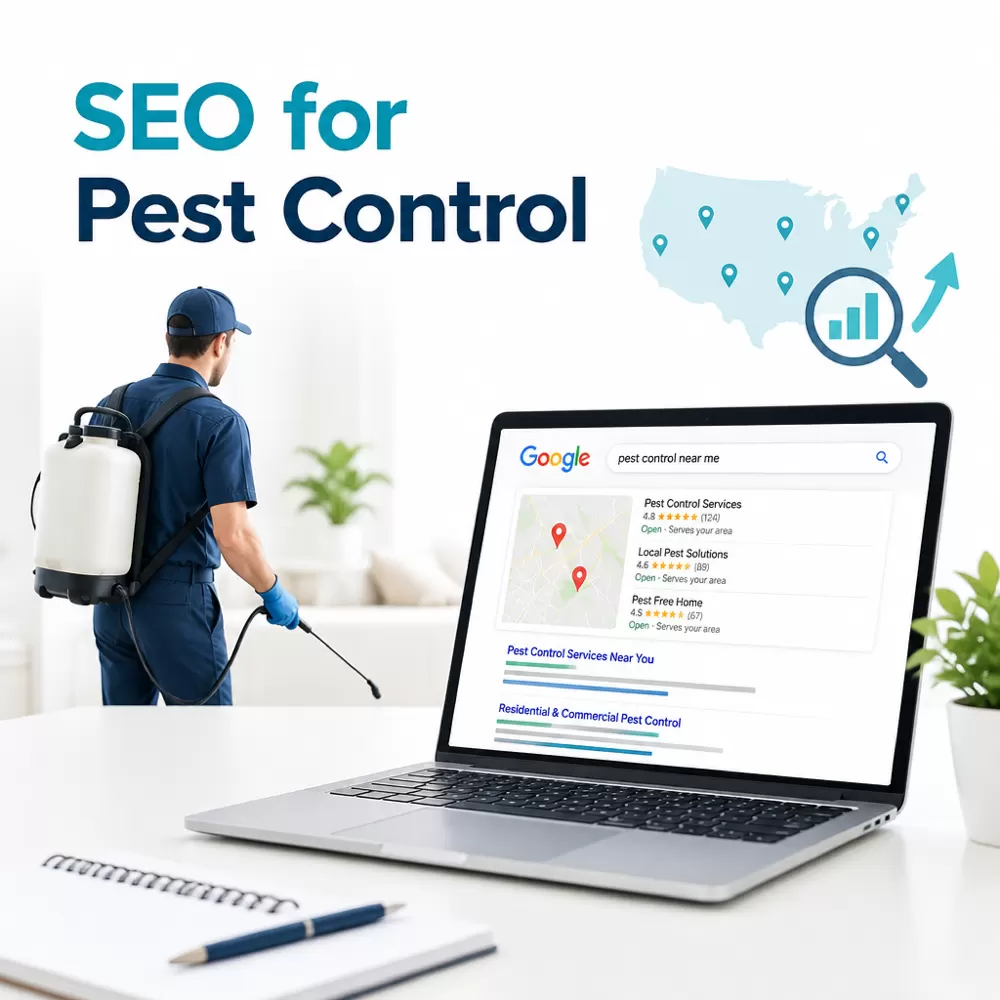
Good reporting should make it possible to connect SEO work with business activity. Ask to see which measures the provider tracks and how often you will review them. Useful measures may include local visibility, organic visits to service pages, calls or forms from organic search, and the quality of those inquiries. Rankings and traffic can provide context, but they do not prove that a campaign is generating appropriate leads.
Before work begins, agree on how calls and forms will be attributed to organic search. Ask how missed calls, repeat inquiries, spam, and people outside your coverage area are handled in the reporting. Your own intake records can help show whether a lead was for a service you offer and a location you serve. SEO reporting has limits: search activity can support a sale without being the only reason a customer chose your company.
When comparing scopes, look for clearly described work across local visibility, technical fixes, useful content, ethical link building, and reporting tied to leads. For an example of how these elements can be brought together with SEO, Answer Engine Optimization (AEO), and Generative Engine Optimization (GEO) support, review seo for pest control. Ask any provider to explain which tasks apply to your business, what depends on your team, and how progress will be reported. A service page is a starting point for that conversation, not evidence of a guaranteed result.
Be cautious if a proposal focuses on a fixed ranking promise, vague monthly activity, or large traffic goals without explaining how the work supports calls from customers you can serve. Also clarify who approves content, who can access your website and analytics, and what happens to the work and reporting if the agreement ends. These practical details make it easier to assess the value of the engagement over time.
Before choosing or renewing a provider, write down your priority services, the locations you truly cover, and what counts as a qualified inquiry. Then request a baseline review of local visibility, service-page coverage, technical needs, and lead tracking. Compare future reports against that starting point, and ask for a clear explanation when activity changes but qualified inquiries do not. That gives you a grounded way to judge whether the strategy is relevant to your business, without treating any single ranking or traffic increase as a guarantee.